
Hospitality & Smart Buildings · Supply Chain & Sustainability
Digital Twins and Smart Building Systems in Cyprus
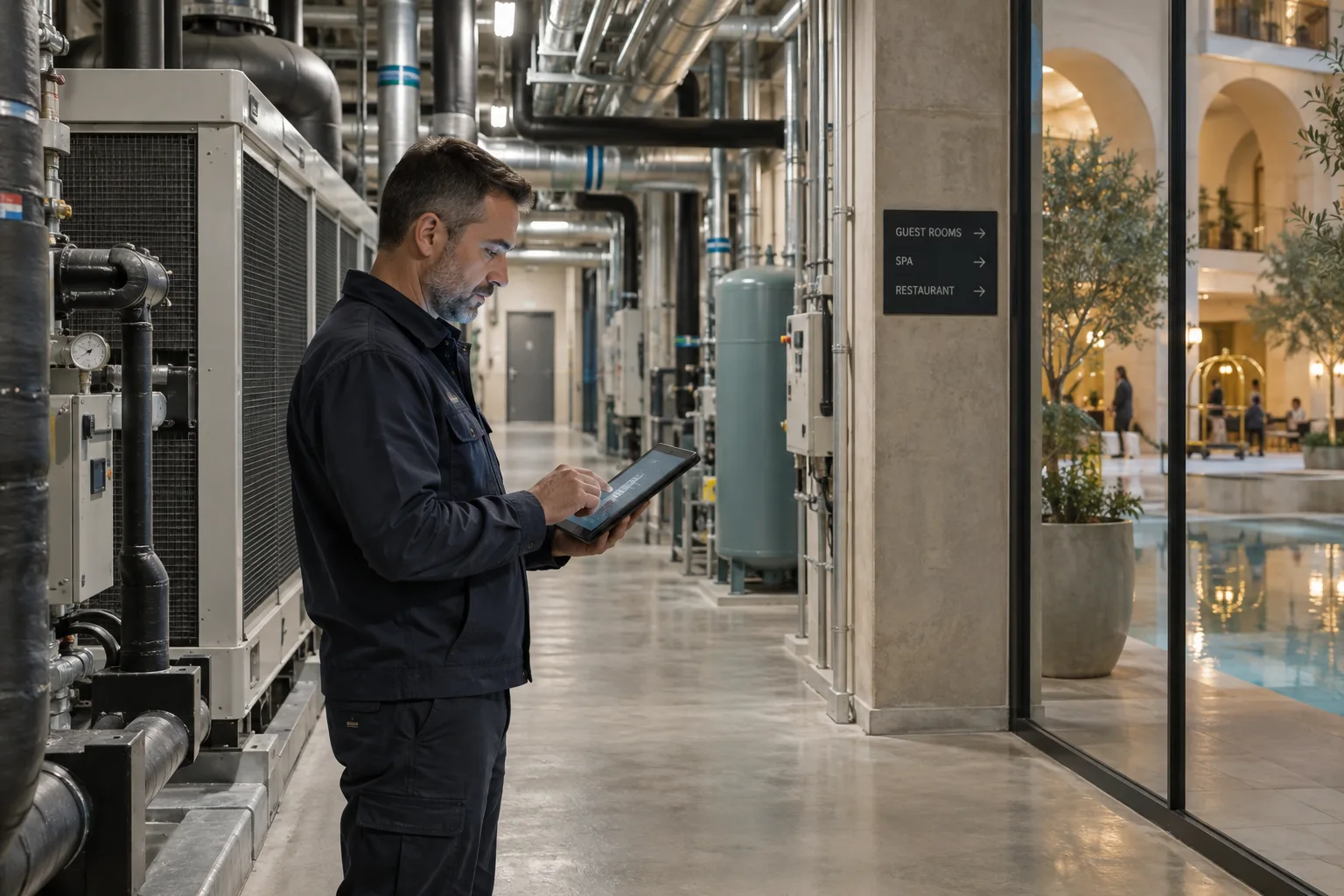
Turn building data into useful decisions
A hotel or commercial building is a physical system with connected parts: heating and cooling, lighting, water, access, occupancy, maintenance and energy use. Many of those systems already produce data, but operators may view it in separate dashboards or discover a problem only after a guest complaint or an unusually high bill. A digital twin brings a structured digital model of a physical asset together with relevant operating information so people can monitor, diagnose, predict or optimise the real system.
The term is sometimes used loosely to describe any 3D building model. A useful operational twin is more than a visual replica. It needs a defined purpose, trusted data, a model of how the relevant equipment behaves and a process for turning an observation into an action. A dashboard that shows temperatures is valuable, but it becomes a twin only when the model relates those readings to the building’s components and helps an operator understand what to do.
Where a twin may help a hotel or property team
Consider a hotel where guests report that some rooms are too warm while energy use rises overnight. A connected model could associate room sensors and plant equipment with floors and control zones, helping staff find whether the cause is a local valve, a schedule or a wider system issue. A maintenance team could compare a pump’s vibration or operating hours with past faults and schedule inspection before a service interruption. A facilities manager might compare zones and understand whether occupancy patterns align with heating and cooling schedules.
These are decision support examples, not a promise that a digital model can predict every fault or automatically save a stated percentage of energy. Sensors can drift, equipment can be replaced, and the original design may differ from the building as it operates today. Data needs context such as equipment location, operating state, maintenance history and control settings. When that information is missing, a sophisticated visualisation can simply make a weak assumption look convincing.
Build a trustworthy model in stages
Begin with a specific question: which maintenance issue, energy cost or guest comfort problem should improve? Inventory the building systems and data sources that can answer it. Map equipment identifiers to rooms, zones and control systems; check sensor quality and sampling frequency; and decide who owns each dataset. Start with a limited area, such as one plant room or one building floor, where operators can compare digital observations with what they see in person.
Connect systems using supported interfaces and retain a clear record of the source and timestamp for each measurement. The model should distinguish a sensor reading from an estimate and make missing or stale data visible. Before an alert changes an operational control, test it in a monitoring mode and ask staff to confirm whether it corresponds to a real condition. A human approval step is appropriate when an action could affect guest comfort, safety, equipment or a building’s availability.
Protect the building as an operational network
Building technology increasingly connects sensors, gateways and control systems to wider business networks. Keep operational systems segmented from public guest Wi-Fi and unnecessary office devices. Give suppliers only the access required for support, protect remote connections and log changes to equipment settings. Use a change process so staff know which system has authority to adjust a control and how to restore the previous configuration if an experiment has an unexpected effect.
Consider what happens when a sensor fails, a network link stops or a software supplier changes a data format. Local building controls should continue to operate safely according to their established rules. The digital twin should show that data is stale instead of treating an old value as current. Backups of configuration and an operating procedure give facilities staff a route to recover without relying on a cloud dashboard during an outage.
Standards and building readiness
The US National Institute of Standards and Technology published a 2026 report summarising digital twins workshops and the needs participants identified for interoperability, validation, cybersecurity and workforce skills. These are practical topics for a property project: the sensor, building model, service provider and maintenance team all need to exchange information in ways that can be understood and maintained.
The European Commission’s Smart Readiness Indicator is another relevant concept for buildings. It considers how building technologies support functions such as energy flexibility, user needs and efficient operation. An indicator or twin does not replace a qualified energy assessment, regulatory review or the judgement of a building engineer. Instead, these frameworks help an owner ask better questions about whether systems can share information and respond to the needs of occupants.
How Tetramatrix can help
Tetramatrix can develop the application layer that presents building data, connect approved information sources and create task or alert workflows for facility teams. We can help define the model’s users, views and integration points, and build a web dashboard that gives staff the context needed to investigate a problem. For a hotel, this could join guest reports with room or maintenance records; for a property manager, it could present asset status and planned inspections.
Our infrastructure service and custom web application development can support the digital platform around a building system. We first confirm which controllers and sensors expose data, who is authorised to access it and whether the current equipment can be safely connected. Where the project requires specialist controls engineering, metering or certification, the building owner should involve qualified domain professionals; the software should complement that expertise.
Prove value before expanding
Select one operational metric and record the current baseline: mean time to identify a fault, unplanned maintenance calls, after-hours energy use or the time staff spend reconciling separate systems. Keep a pilot in observation mode long enough to see normal variation. Ask operators whether the alerts were accurate and actionable. If a model triggers frequent false alarms or adds another screen with no owner, pause and fix the data or workflow before connecting more equipment.
A digital twin earns its place when it reflects the real building closely enough to help a person make a better decision. A focused model with trusted information and an accountable operator can be more useful than an ambitious platform that tries to represent every system at once. Start with a building problem, verify what the data can support and expand only when the team can show a measurable operational benefit.